Search
The five white canopies, crafted from PTFE membrane, resemble the spiritual abodes of the five clans of Gunaikurnai. This semi-transparent veil allows light to take center stage in the narrative. By day, it serves as a gentle filter, bringing the clan’s emblems to life in the sunlight, whispering ancient legends; at night, when the lights are turned on, the patterns on the emblems emerge on the membrane, transforming the entire fabric structure into a flowing tapestry, as if a ceremony is in progress. The very space itself becomes a spiritual tribute.
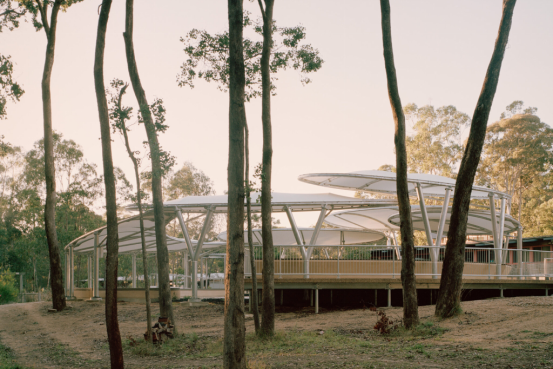
The PTFE membrane material, with its excellent fire resistance and weather resistance, perfectly suits the site environment of the theater, which is located near eucalyptus forests. At the same time, this shade canopy can withstand the intense ultraviolet radiation and the erosion of rainwater in East Gibson.Additionally, The precise light-transmitting properties of PTFE membrane endow the space with a poetic quality. It creates an experience akin to “natural light in the woods,” allowing one to embrace the philosophy of coexistence between humanity and nature within this blurred space defined by soft light and shadow.
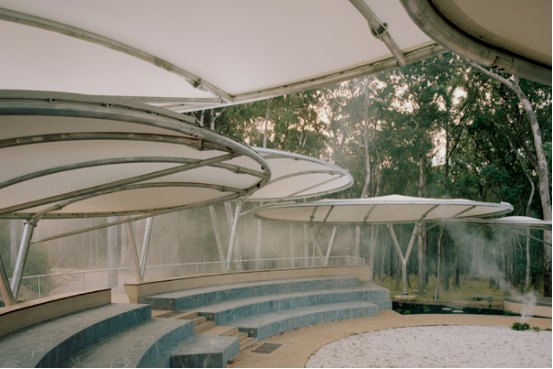
The Wangun Amphitheatre, with its PTFE membrane structure, has successfully transformed the cultural symbols of the Gunaikurnai indigenous people—such as the emblems of the five clans—into a modern architectural expression. This architectural design breaks the stereotype that indigenous culture can only be expressed through traditional forms, making it a cultural landmark in East Gippsland.

The lightness and durability of the PTFE tensile fabric canopy are akin to the legacy of the Gunakurnai culture – embracing modern innovation while also being rooted in the spirit of the land. In the intersection of architecture and culture, it embodies the indigenous people’s contemporary architectural poetry.


Copyright © Zhejiang Wanhao Group Co., Ltd. All Rights Reserved.
Sitemap | Technical Support